
Introduction
Dolly Parton's Crafted Beauty: The Bold, Unapologetic Glamour That Refused to Fade
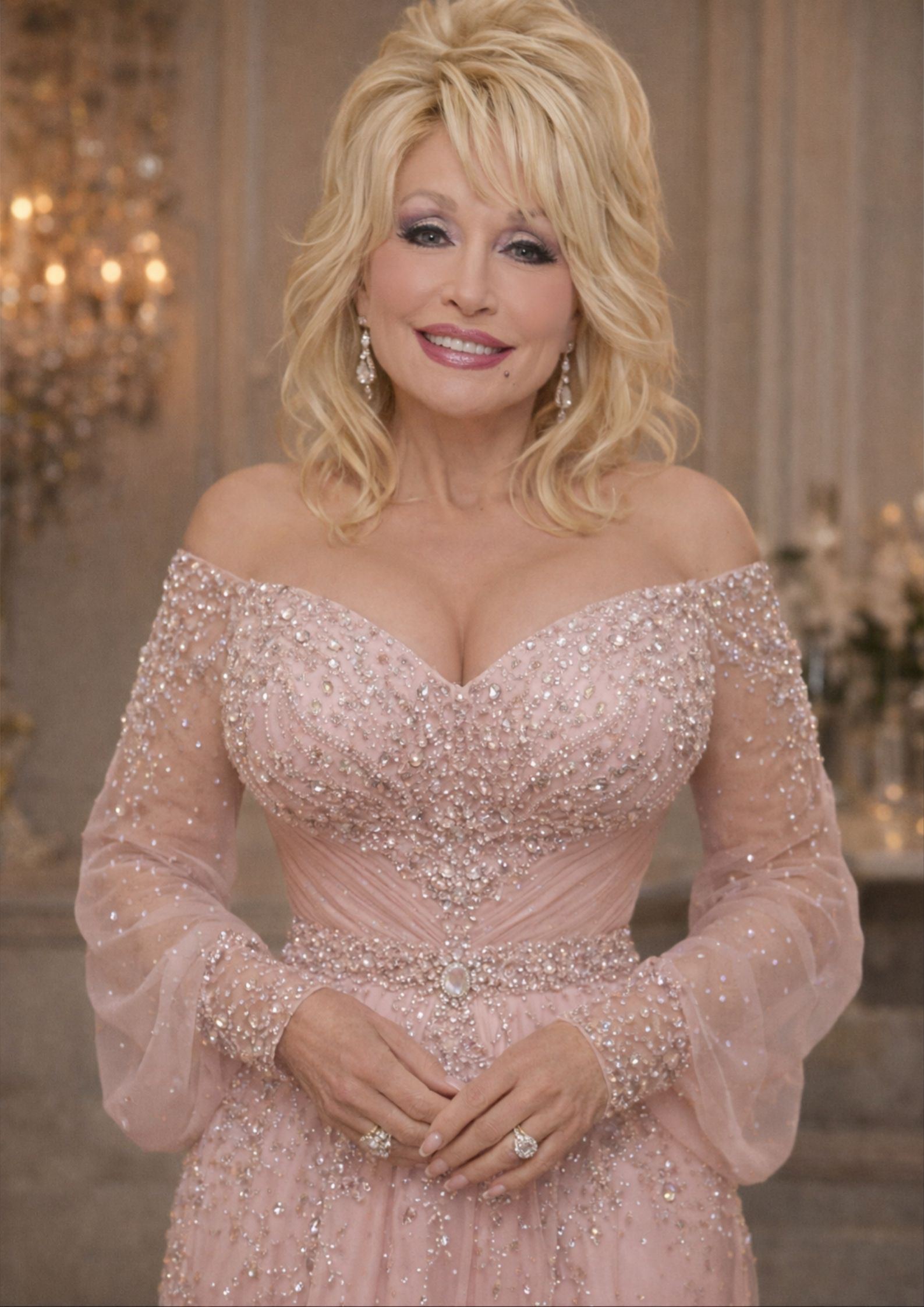
There are beautiful women, and then there are women who turn beauty into a signature so unforgettable that it becomes part of cultural history. Dolly Parton belongs to that rare second category. For decades, she has stood before the world not as a symbol of natural simplicity, but as something far more fascinating: a woman who openly embraced artifice, transformation, and theatrical glamour—and somehow made it feel honest.
That is what makes her so compelling.
Dolly Parton's beauty has never pretended to be untouched. It has never asked the world to believe it simply "happened." On the contrary, part of her power lies in the fact that she has long understood beauty as performance, intention, and design. Hair, makeup, clothing, sparkle, silhouette, poise—everything about her visual image has been shaped with extraordinary care. In a culture that often praises women for appearing effortlessly beautiful, Dolly chose another path. She made effort visible. She made polish part of the statement. And in doing so, she created a kind of glamour that older audiences especially understand: not innocence, but invention.
There is something undeniably magnetic about that.
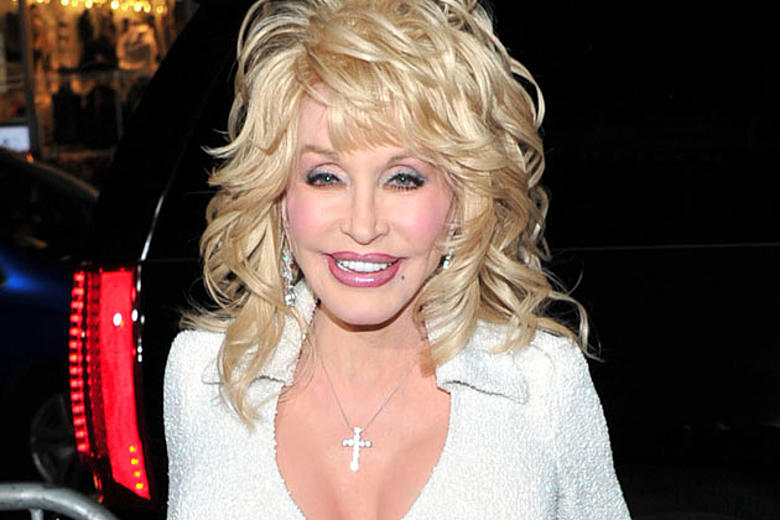
Her beauty is not fragile. It does not rely on the illusion of youth alone. It is structured, deliberate, highly stylized, and deeply feminine in a way that refuses to apologize for itself. Dolly's face, her smile, her eyes, her iconic hair, her carefully maintained image—all of it speaks to a woman who decided long ago that if the world was going to look at her, then she would decide what it saw. That decision carries a kind of authority. It is not passive beauty. It is chosen beauty.
And chosen beauty has its own drama.
For many people, Dolly Parton represents one of the most striking examples of cosmetic enhancement becoming part of a public identity rather than something hidden behind it. She never built her legend on the claim of untouched perfection. Instead, she leaned into glamour so fully that the glamour itself became real. That is the paradox. The beauty may be enhanced, sculpted, refined, and maintained—but the confidence behind it is authentic. The image is constructed, yet the woman inside it feels unmistakably genuine.
That combination is rare.
It is also why her appearance has remained so captivating for so long. Her beauty does not merely attract attention because it is polished. It attracts attention because it is fearless. Dolly Parton does not present herself as a woman embarrassed by vanity. She presents herself as someone who understands that appearance can be both playful and powerful. She knows that glamour can be armor. She knows that reinvention can become habit. And she knows, perhaps better than most, that once a person begins reshaping the image they show the world, the desire to keep refining it can become extremely strong.
That is one of the more complex truths surrounding cosmetic beauty.
It can be seductive—not only in the result, but in the process. One adjustment leads to another. One refinement opens the imagination to the next possibility. A person looks in the mirror and begins to see not only what is there, but what else might be improved, softened, lifted, brightened, reshaped. Beauty, once treated as a project, can become an ongoing pursuit. Not always out of insecurity alone, but out of momentum. Out of fascination. Out of the intoxicating feeling that appearance is no longer fixed, but endlessly editable.
:max_bytes(150000):strip_icc()/dolly-parton-recirc-getty-10-8-b23c01c883f34916bb31cff61cf2f87b.jpg)
Dolly's public image speaks to that fascination without ever reducing her to it.
That is important. Because while her beauty is clearly curated, it is not the whole of her legacy. The danger in talking about cosmetic glamour is that people sometimes mistake enhancement for emptiness. But Dolly Parton has never been empty. Behind the lashes, the jewels, the polished face, and the famous silhouette stands one of the sharpest minds in entertainment—a songwriter, businesswoman, storyteller, humanitarian, and cultural force. Her beauty may be artificial in some ways, but her intelligence, wit, discipline, and emotional warmth are anything but.
In fact, that contrast may be part of her enduring allure.
She looks like fantasy, but she speaks like someone who understands life.
She appears extravagant, yet often comes across as emotionally grounded.
She is glamorous without being cold, dazzling without being distant.

That balance is what saves her beauty from becoming superficial. It is not merely about looking youthful or attractive. It is about embodying a kind of heightened femininity that feels theatrical, self-aware, and oddly empowering. Dolly turned cosmetic enhancement into part of a broader personal language—a way of saying that beauty is not always something inherited. Sometimes it is built, maintained, exaggerated, and proudly worn.
For older readers, there is something especially interesting in that message. Age teaches that beauty changes. It becomes less about innocence and more about intention. Less about what time gave freely and more about what a woman chooses to preserve, emphasize, or reinvent. Dolly Parton's appearance may not represent everyone's ideal, but it represents something undeniably vivid: a refusal to disappear quietly. A refusal to surrender glamour simply because time has passed.
And that refusal has power.
Still, the deeper conversation around her image is not only about admiration. It is also about the strange hunger beauty can create. Once people discover that transformation is possible, they may find it difficult to stop chasing the next version of themselves. That is not just a celebrity story. It is a human one. Cosmetic beauty can be thrilling, but it can also become a cycle—one driven by desire, comparison, and the hope that the next change will finally bring satisfaction. Sometimes it does. Sometimes it only awakens a stronger appetite for more.
Dolly Parton's public face stands at the center of that tension: beautiful, artificial, fascinating, and impossible to ignore.
But perhaps the final truth is this: what makes her so unforgettable is not simply that she changed her appearance. It is that she made the world accept her version of beauty on her own terms. She did not wait for permission to be too much. Too glamorous. Too bright. Too polished. Too artificial. Too unforgettable.
She simply became all of it.
And in doing so, she proved that even constructed beauty, when carried with enough confidence, can become a kind of legend.