
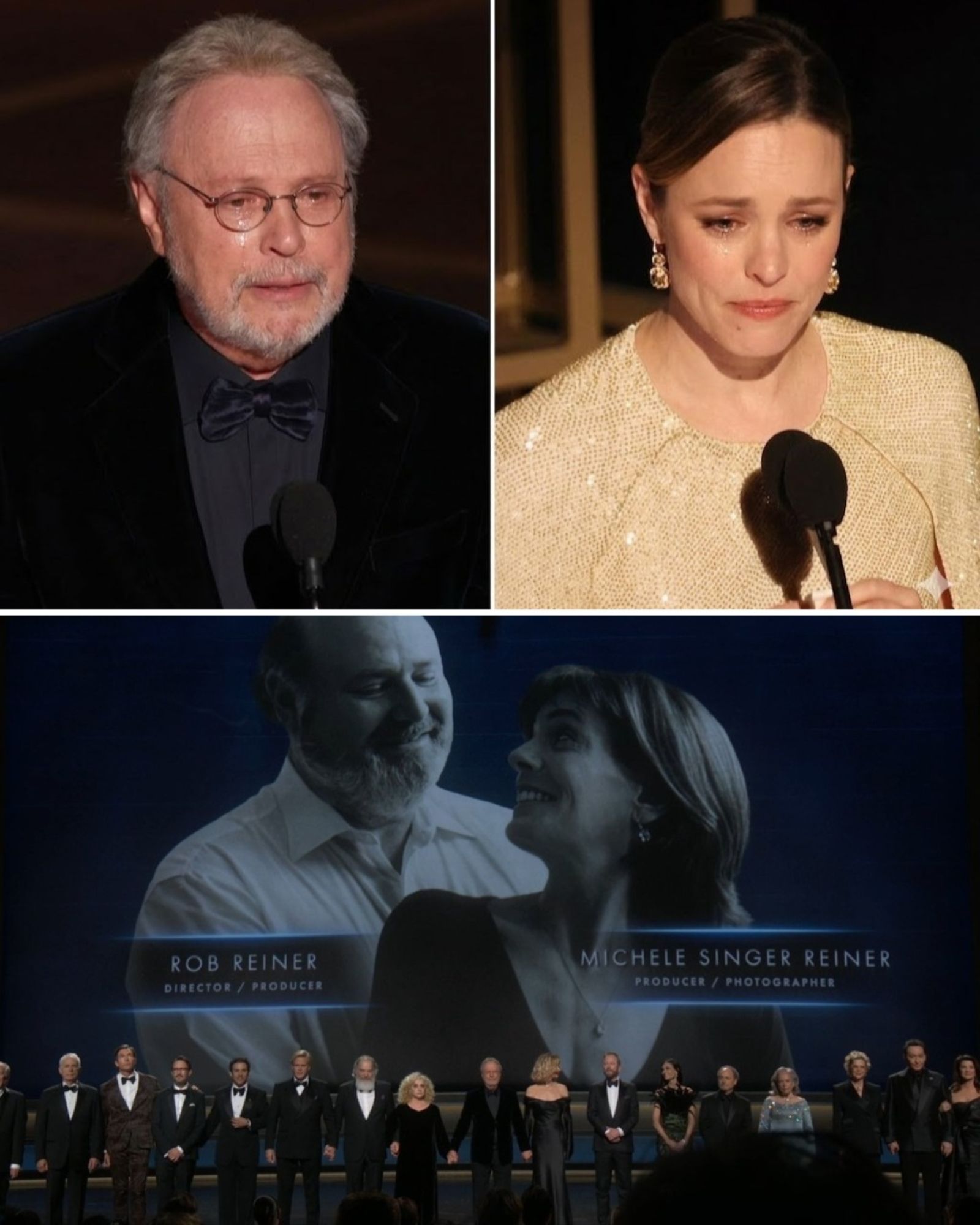
It began the way so many Oscar tributes begin — with a single figure, a soft spotlight, and an audience expecting something respectful, polished, and brief. But the moment Billy Crystal stepped onto the stage, it was clear this would not be ordinary.
Billy Crystal did not arrive with a joke ready to break the tension. Billy Crystal did not try to turn the room light. Billy Crystal walked out carrying something heavier: memory. The kind that lives in old conversations, in late-night laughter, in movie scenes people know by heart, and in friendships that leave an imprint long after the cameras stop rolling.
The tribute was meant to honor Rob Reiner, the filmmaker whose stories had long ago moved beyond the screen and settled into people's lives. Rob Reiner made audiences laugh, ache, and hold on a little tighter to the people beside them. Rob Reiner made stories feel lived-in. Even the funniest moments had heart. Even the sweetest scenes had a little sadness behind them, as if they already knew one day they would become memories.
A Voice Already on the Edge
Billy Crystal stood there alone for only a moment, but it felt longer. The room was quiet in that rare, fragile way a theater becomes quiet when people sense something real is about to happen. Billy Crystal spoke not like a presenter, but like a friend trying to keep composure in front of thousands of people.
There was warmth in every sentence, but also strain. Billy Crystal talked about Rob Reiner as someone who had given the world stories that felt bigger than entertainment. These were not just films. They were emotional landmarks. They were the kind of movies people revisit when life changes — when they fall in love, lose someone, grow older, or try to remember who they once were.
And then the stage changed.
The Faces Behind the Memories
Without fanfare, without any dramatic announcement, other figures began to appear behind Billy Crystal. One by one, almost quietly, as if entering a chapel rather than a broadcast. Meg Ryan. Kathy Bates. Demi Moore. Jerry O'Connell. And five other stars, standing in stillness, carrying with them the weight of the worlds Rob Reiner once helped build.
That was the moment the audience understood this was not just a career salute. It had become a reunion of memories. Not only for the people on that stage, but for everyone watching. Each face seemed to bring a different chapter with it — a different era, a different emotion, a different scene that audiences had folded into their own lives years ago.
No one needed to explain why it hit so hard. The actors standing behind Billy Crystal were not simply famous performers. In that moment, they looked like witnesses. Like people who had once stepped into Rob Reiner's stories and never fully stepped out again.
"What fun we had."
When Billy Crystal finally whispered those words, the tribute stopped feeling like Hollywood altogether. It became smaller, more human, more exposed. It sounded less like a line written for television and more like the kind of sentence people say when they are trying not to cry in public.
The Silence Before the Standing Ovation
Some people in the audience were visibly emotional. Some stared ahead without moving, as if afraid the moment would break if they did. Others clasped their hands together, the way people do when they are holding themselves steady. There was no rush to respond. For a breath or two, the silence itself became part of the tribute.
Then the room rose.
Nearly 4,000 people stood at once, and the applause that followed did not feel loud in the usual Oscar way. It felt deep. Personal. Grateful. It was not the kind of ovation given to spectacle. It felt like something else entirely — a collective acknowledgment that Rob Reiner had given people more than successful films. Rob Reiner had given them emotional reference points. A way to remember what love sounded like, what friendship looked like, what adventure felt like, and why certain stories stay alive long after the credits end.
One Last Thank You
By the time the cameras pulled back, the image onstage had become unforgettable: Billy Crystal in front, Meg Ryan, Kathy Bates, Demi Moore, Jerry O'Connell, and five other stars behind, all standing inside the glow of memory. It looked less like a performance than a final gathering around someone whose work had shaped them.
And maybe that is why the moment landed so powerfully. It was not simply about legacy. It was about affection. About history. About the strange and beautiful way art lets people stay with us.
For one quiet stretch at the Oscars, it felt as if the whole room understood the same thing at once: some filmmakers do not just make movies. Some filmmakers leave behind places people return to for the rest of their lives.
That night, the applause sounded like one last thank you to the man who helped them all storm the castle.